


HTTP/3 promises performance enhancements like reduced latency, increased reliability, and improved security for users.

HTTP/3 is the third major version of the Hypertext Transfer Protocol used to exchange information on the web. It is built on top of a new protocol called QUIC, which is set to fix some limitations of the previous protocol versions. Without getting into technical details—though feel free to do so in the comments if you have questions—our users should see performance improvements across all metrics:
- Reduced latency. Due to faster connection establishment (i.e. fewer round-trips), latency from connection setup is lower.
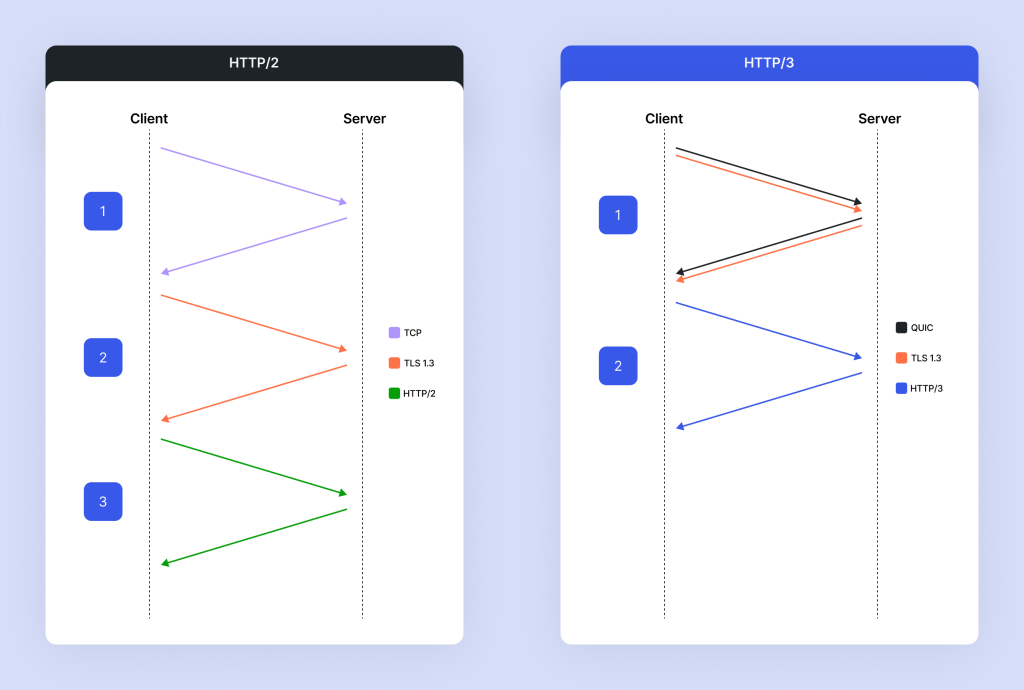
- Multiplexing. That is, using a single connection for multiple resources. While this feature is present in HTTP/2, HTTP/3 has improved on it and fixed a problem called “head of line blocking.” This is a deficiency of the underlying protocol HTTP/2 was built on top, which requires packets to be in order before relaying them for processing.
- Reliability. Designed to perform better in varying network environments, HTTP/3 uses modern algorithms to help it recover faster from lost data and busy networks.
- Improved security. QUIC uses the latest cryptography protocols (TLSv1.3) to encrypt and secure data. More of the data is encrypted, which makes it harder for an attacker to tamper with or listen in on web requests.
Ultimately, HTTP/3 (on top of QUIC) has been designed to be updated in software, which allows for quicker improvements that don’t depend on underlying network infrastructure.
After about a month of preparing our infrastructure—including fixing bugs and upgrading our CDN—HTTP/3 was enabled for all of Automattic’s services on December 27th, 2023. It currently serves between ~25-35% of all traffic.
And now for some stats. For each of these, we want numbers to be lower after the switch, which ultimately means faster speeds across the board for our customers. Let’s look at three metrics in particular:
- Time to First Byte (TTFB) measures the time between the request for a resource and when the first byte of a response arrives.
- Largest Contentful Paint (LCP) represents how quickly the main content of a web page is loaded.
- Last Resource End (LRE) measures the time between the request for a resource and when the whole response has arrived.
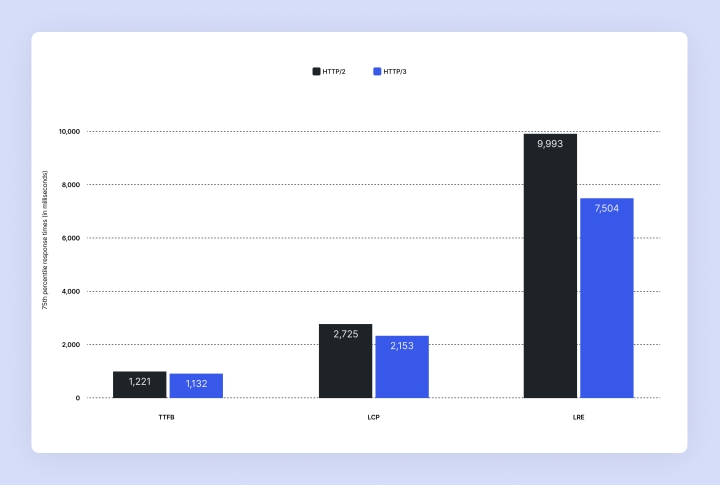
Improvements look pretty good for fast connections:
- TTFB: 7.3%
- LCP: 20.9%
- LRE: 24.4%

For slow connections, the results are even better:
- TTFB: 27.4%
- LCP: 32.5%
- LRE: 35%
We are dedicated to providing our customer’s websites with the best possible performance. Enabling HTTP/3 is a step in that direction. See you on the QUIC side!
Automattic’s mission is to democratize publishing. To accomplish that, we’re hiring systems engineers to join the best infrastructure team on the planet. Learn more here.
Join 104.9M other subscribers